ISO/IEC JTC 1/SC 24 Computer graphics, image processing and environmental data representation is a standardization subcommittee of the joint subcommittee ISO/IEC JTC 1 of the International Organization for Standardization (ISO) and the International Electrotechnical Commission (IEC), which develops and facilitates standards within the field of computer graphics, image processing, and environmental data representation. The international secretariat of ISO/IEC JTC 1/SC 24 is the British Standards Institute (BSI) located in the United Kingdom. == History == ISO/IEC JTC 1/SC 24 was formed in 1987 from ISO/TC 97 as a result of Resolution 21 at the ISO/IEC JTC 1 plenary. The group's origins began in computer graphics, the standardization of which was originally under ISO/IEC JTC 1/SC 21/WG 2. However, when ISO/IEC JTC 1/SC 24 was created, the standardization activity of ISO/IEC JTC 1/SC 21/WG 2 was carried over to the new subcommittee. The initial five working groups of ISO/IEC JTC 1/SC 24 were titled, “Architecture,” “Application programming interfaces,” “Metafiles and interfaces,” “Language bindings,” and “Validation, testing and registration.” The work of ISO/IEC JTC 1/SC 24 began with the Graphical Kernel System (GKS), which was adopted from ISO/IEC JTC 1/SC 21/WG 2. However, since GKS only addressed 2D functionality, attention turned to the standardization of 3D functionality. This resulted in two standards being published: GKS-3D in 1988 and PHIGS in 1989, both of which addressed 3D functionality. Since 1991, ISO/IEC JTC 1/SC 24 has held plenaries in a number of countries, including the Netherlands, Germany, United States, France, Canada, Japan, Sweden, Korea, United Kingdom, Australia, and Czech Republic. == Scope == The scope of ISO/IEC JTC 1/SC 24 is the “Standardization of interfaces for information technology based applications relating to”: Computer graphics Image processing Environmental data representation Support for the Mixed and Augmented Reality (MAR) Interaction with, and visual representation of, information Included are the following related areas: Modeling and simulation and related reference models Virtual reality with accompanying augmented reality/augmented virtuality aspects and related reference models Application program interfaces Functional specifications Representation models Interchange formats, encodings and their specifications, including metafiles Device interfaces Testing methods Registration procedures Presentation and support for creation of multimedia, hypermedia, and mixed reality documents Excluded are the following areas: Character and image coding Coding of multimedia, hypermedia, and mixed reality document interchange formats JTC 1 work in user system interfaces and document presentation ISO/TC 207 work on ISO 14000 environment management, ISO/TC 211 work on geographic information and geomatics Software environments as described by ISO/IEC JTC 1/SC 22 == Structure == ISO/IEC JTC 1/SC 24 is made up of four active working groups, each of which carries out specific tasks in standards development within the field of computer graphics, image processing and environmental data representation, together with ITU-T Study Group 16. As a response to changing standardization needs, working groups of ISO/IEC JTC 1/SC 24 can be disbanded if their area of work is no longer applicable, or established if new working areas arise. The focus of each working group is described in the group's terms of reference. Active working groups of ISO/IEC JTC 1/SC 24 are: == Collaborations == ISO/IEC JTC 1/SC 24 works in close collaboration with a number of other organizations or subcommittees, both internal and external to ISO or IEC, in order to avoid conflicting or duplicative work. Organizations internal to ISO or IEC that collaborate with or are in liaison to ISO/IEC JTC 1/SC 24 include: ISO/IEC JTC 1/WG 7, Sensor Networks ISO/IEC JTC 1/SC 29, Coding of audio, picture, multimedia and hypermedia information ISO/IEC JTC 1/SC 32, Data management and interchange ISO/TAG 14, Imagery and technology ISO/TC 130, Graphic Technology ISO/TC 184/SC 4, Industrial data ISO/TC 211, Geographic information/Geomatics ISO/TC 215, Health informatics IEC TC 100, Audio, video and multimedia system and equipment Some organizations external to ISO or IEC that collaborate with or are in liaison to ISO/IEC JTC 1/SC 24 include: Defence Geospatial Information Working Group (DGIWG) Digital Imaging and Communications in Medicine (DICOM) International Hydrographic Organization (IHO) The Khronos Group NATO - Joint Intelligence Surveillance and Reconnaissance Capability Group (JISRCG) OMG Robotics DTF Open CGM Open Geospatial Consortium (OGC) SEDRIS Organization Simulation Interoperability Standards Organization (SISO) US National Imagery Transmission Format Standard (NITFS) Technical Board (US NTB) Web3D Consortium World Intellectual Property Organization (WIPO) World Wide Web Consortium (W3C) == Member countries == Countries pay a fee to ISO to be members of subcommittees. The 11 "P" (participating) members of ISO/IEC JTC 1/SC 24 are: Australia, China, Egypt, France, India, Japan, Republic of Korea, Portugal, Russian Federation, United Kingdom, and United States. The 22 "O" (observer) members of ISO/IEC JTC 1/SC 24 are: Argentina, Austria, Belgium, Bosnia and Herzegovina, Bulgaria, Canada, Cuba, Czech Republic, Finland, Ghana, Hungary, Iceland, Indonesia, Islamic Republic of Iran, Italy, Kazakhstan, Malaysia, Poland, Romania, Serbia, Slovakia, Switzerland, and Thailand. == Published standards == ISO/IEC JTC 1/SC 24 currently has 80 published standards under their direct responsibility within the field of computer graphics, image processing, and environmental data representation, including:
Lazy learning
(Not to be confused with the lazy learning regime, see Neural tangent kernel). In machine learning, lazy learning is a learning method in which generalization of the training data is, in theory, delayed until a query is made to the system, as opposed to eager learning, where the system tries to generalize the training data before receiving queries. The primary motivation for employing lazy learning, as in the K-nearest neighbors algorithm, used by online recommendation systems ("people who viewed/purchased/listened to this movie/item/tune also ...") is that the data set is continuously updated with new entries (e.g., new items for sale at Amazon, new movies to view at Netflix, new clips at YouTube, new music at Spotify or Pandora). Because of the continuous update, the "training data" would be rendered obsolete in a relatively short time especially in areas like books and movies, where new best-sellers or hit movies/music are published/released continuously. Therefore, one cannot really talk of a "training phase". Lazy classifiers are most useful for large, continuously changing datasets with few attributes that are commonly queried. Specifically, even if a large set of attributes exist - for example, books have a year of publication, author/s, publisher, title, edition, ISBN, selling price, etc. - recommendation queries rely on far fewer attributes - e.g., purchase or viewing co-occurrence data, and user ratings of items purchased/viewed. == Advantages == The main advantage gained in employing a lazy learning method is that the target function will be approximated locally, such as in the k-nearest neighbor algorithm. Because the target function is approximated locally for each query to the system, lazy learning systems can simultaneously solve multiple problems and deal successfully with changes in the problem domain. At the same time they can reuse a lot of theoretical and applied results from linear regression modelling (notably PRESS statistic) and control. It is said that the advantage of this system is achieved if the predictions using a single training set are only developed for few objects. This can be demonstrated in the case of the k-NN technique, which is instance-based and function is only estimated locally. == Disadvantages == Theoretical disadvantages with lazy learning include: The large space requirement to store the entire training dataset. In practice, this is not an issue because of advances in hardware and the relatively small number of attributes (e.g., as co-occurrence frequency) that need to be stored. Particularly noisy training data increases the case base unnecessarily, because no abstraction is made during the training phase. In practice, as stated earlier, lazy learning is applied to situations where any learning performed in advance soon becomes obsolete because of changes in the data. Also, for the problems for which lazy learning is optimal, "noisy" data does not really occur - the purchaser of a book has either bought another book or hasn't. Lazy learning methods are usually slower to evaluate. In practice, for very large databases with high concurrency loads, the queries are not postponed until actual query time, but recomputed in advance on a periodic basis - e.g., nightly, in anticipation of future queries, and the answers stored. This way, the next time new queries are asked about existing entries in the database, the answers are merely looked up rapidly instead of having to be computed on the fly, which would almost certainly bring a high-concurrency multi-user system to its knees. Larger training data also entail increased cost. Particularly, there is the fixed amount of computational cost, where a processor can only process a limited amount of training data points. There are standard techniques to improve re-computation efficiency so that a particular answer is not recomputed unless the data that impact this answer has changed (e.g., new items, new purchases, new views). In other words, the stored answers are updated incrementally. This approach, used by large e-commerce or media sites, has long been used in the Entrez portal of the National Center for Biotechnology Information (NCBI) to precompute similarities between the different items in its large datasets: biological sequences, 3-D protein structures, published-article abstracts, etc. Because "find similar" queries are asked so frequently, the NCBI uses highly parallel hardware to perform nightly recomputation. The recomputation is performed only for new entries in the datasets against each other and against existing entries: the similarity between two existing entries need not be recomputed. == Examples of Lazy Learning Methods == K-nearest neighbors, which is a special case of instance-based learning. Local regression. Lazy naive Bayes rules, which are extensively used in commercial spam detection software. Here, the spammers keep getting smarter and revising their spamming strategies, and therefore the learning rules must also be continually updated.
Gundam Build Divers Re:Rise
Gundam Build Divers Re:Rise (Japanese: ガンダムビルドダイバーズRe:RISE, Hepburn: Gandamu Birudo Daibāzu Re:Raizu) is a Japanese original net animation anime series produced by Sunrise Beyond, and the fourth series within the Gundam Build Series sub-series. A sequel to the 2018 anime Gundam Build Divers, it is the first Gundam anime series to be released in the Reiwa period, released to celebrate the franchise's 40th anniversary. The series is directed by Shinya Watada and written by Yasuyuki Muto. Initially announced at the Gundam 40th anniversary video, the series aired on its Gundam Channel YouTube channel from October 10 to December 26, 2019. A TV airing of the ONA began on BS11 on October 12, 2019, and on January 28, 2020, on Tokyo MX. A second season aired from April 9 to August 27, 2020. Two spinoffs of the series were later serialized in Kadokawa's Gundam Ace magazine and Hobby Japan. == Plot == Two years have passed since the EL-Diver Incident, an event that almost destroyed the Gunpla Battle Nexus Online (GBN) game until it was resolved by the force group known as "Build Divers", and soon after more EL-Divers were discovered. In order to make the game more secure, a newer version of the game was rolled out in order to prevent the same incident from happening again and with newer experiences that would make the gameplay more immersive to players. The story focuses on Hiroto Kuga, a high schooler who is a rogue mercenary Gunpla Diver in GBN, who goes in the game and wanders throughout its countless dimensions while helping out other Divers whether it is on insistence or by hire. Despite his selfless act, he chooses to remain unaffiliated with anyone and refuses rewards and Force (Diver parties) group invites, isolating himself from other people even in real life. His primary goal as a Diver is to be reunited with a mysterious girl from his past named Eve, who was in fact the very first EL-Diver to appear in the game. But after a special request mission, Hiroto is united with three other active Divers in a strange world named "Eldora" and forms the Force group "BUILD DiVERS" in what appears to be just another GBN gamespace event, until they learn the truth about Eldora and its consequences not only for GBN, but for the entire world. == Characters == === BUILD DiVERS === Hiroto Kuga (クガ・ヒロト, Kuga Hiroto) / Hiroto (ヒロト, Hiroto) Voiced by: Chiaki Kobayashi (Japanese); Billy Kametz (English) The main protagonist of the series and a high-school builder, veteran diver, and a former ace member of the Force group Avalon, who lives in Yokohama. He was one of the first minors to make it to the deep end of GBN, due to his conviction of being a person who does his best to help others. He was active prior and during the events of the previous series. Now working as a rogue diver for hire after leaving Avalon, he wanders the GBN gamespace alone, harboring regrets, resentments, and suffering from trauma after the death of his close friend and lover, the EL-Diver Eve. He is very calm and a man of few words, usually refusing others' reward and help, especially on joining other forces, but this stoic persona is a mental mask to hide his condition from everyone, including his parents. But when a special mission done by Freddie united him with Kazami, May and Parviz, they accidentally formed the force team named "BUILD DiVERS" to protect the Eldorans from the One-Eyes army. Currently he is the ace of his unit and the leader of the overall force. Hiroto uses the PFF-X7 Core Gundam as his main Gunpla, based on the RX-78-2 Gundam from the original Mobile Suit Gundam series. Its special armament system called the "core-change" gimmick and his first theme invented from that gimmick is the "Planets System". This allows the Core Gundam to be equipped with various types of armor and weapons, each for a different situation named after the eight planets. Hiroto later upgrades his Gunpla into the PFF-X7II Core Gundam II. This new Core Gundam can transform into the "Core Flyer", in a similar fashion to the original Gundam's FF-X7 Core Fighter for increased mobility and like its predecessor, it can also use the Planets System: Earth Armor (PFF-X7/E3 Earthree Gundam): Core Gundam's default blue armor, focused on traditional all-around combat. Mars Armor (PFF-X7/M4 Marsfour Gundam): A red armor whose focus is on fragments of four styles of close combat, hence "Cross-Combat". Venus Armor (PFF-X7/V2 Veetwo Gundam): A green armor whose focus is commando style ranged and bombardment combat, additionally with option works. Mercury Armor (PFF-X7/M1 Mercuone Gundam): A navy armor whose focus is underwater combat. Jupiter Armor (PFF-X7/J5 Jupitive Gundam): A white armor whose focus is fast orbital combat. Uranus Armor (PFF-X7II/U7 Uraven Gundam): An indigo armor focused on reconnaissance and high powered sniping. Saturn Armor (PFF-X7II/S6 Saturnix Gundam): An orange armor focused in demolition style close combat without beam weapons, originally developed to counter Gundam Frames. Neptune Armor (PFF-X7II/N8 Nepteight Gundam): An aqua-green armor equipped with a customized Volture Lumiere system similar to the one from Mobile Suit Gundam SEED C.E. 73: Stargazer, intended to be used for traveling through GBN's space in a short amount of time, but was used for launching into orbit instead of maneuvering in deep space. It is ultimately discarded in Eldora's orbit due to the strain of leaving Eldora's gravitational field. Pluto Armor (PFF-X7II+/P9 Plutine Gundam): Appearing only on Gundam Build Metaverse, the black colored armor is used for close combat and dueling purposes with its color scheme reminiscent of that of EcoPla. PFF-X7II/BUILD DiVERS Re:Rising Gundam: A special combination of the Core Gundam II with the WoDom Pod + and parts from the Gundam Aegis Knight and the EX Valkylander, armed with two giant beam sabers, eight miracle wings born from Eve's blessings, and the "Grand Cross Cannon", Hiroto's first special move, made with the help of his team. In one occasion, Hiroto changes his avatar to a Haro to pilot the Mobile Builder Haro Loader to help with the repairs on Cuadorn by making a prosthetic wing out of gunpla parts. During the Gunpla Battle Royal, he pilots an unmodified ASW-G-08 Gundam Barbatos Lupus Rex from Mobile Suit Gundam: Iron-Blooded Orphans. In Battlelogue, it is revealed that he has made a second Core Gundam II that he leaves on Eldora with the colors of the Gundam MK-II Titan. Another variant of this Gunpla sports the old "Gundam G3" colors with his team's personal crest, which is most likely to represent Sarah since the color of her hair, eyes, and dress embody Hiroto's time with Eve before they joined Avalon and to symbolize how he has officially befriended the original Build Divers. Each of the two units have unique advancements, the Titan color specializes in ground and underwater combat and the G3 color specializes in aerial and space combat. May (メイ, Mei) Voiced by: Mai Fuchigami (Japanese); Lauren Landa (English) A seemingly late teens female diver who prefers to play solo, she is a very calm and no-nonsense girl whose interest is in battles alone. However, she is not a fan of those who engage their opponents head on and prefers to implement a strategic approach. She is mature and has a strong sense of justice, and can be impulsive rushing into situations, especially for those in danger. Later in the series, she is revealed to be one of the 87 EL-Divers, however she was not one of those who were saved after the EL-Diver incident two years ago, she was born shortly after. After she was born she was given her own Mobile Doll body similar to Sarah, that is when she first met her, Koichi, Tsukasa, and Nanami. During the Lotus Challenge Eldoran style rehearsal battle it is revealed that she, as a new sister of Sarah, addresses the latter as the older since Sarah is chronologically older, regardless of her maturity. In the final episode, she is revealed to have been born with the remnant data originating from Eve, the first born EL-Diver who Hiroto befriended and fell in love with several years ago, and carries Eve's earring on her armband. In Battlelogue, it's implied that she is currently living with Hiroto IRL and in GBN is his attendant. May uses the JMA0530-MAY WoDom Pod as her main Gunpla, which is a customized JMA-0530 Walking Dome from Turn A Gundam. In the later episodes, the mobile suit is revealed to be a disguise for its true form, the HER-SELF Mobile Doll May. May later upgrades her WoDom Pod into the JMA0530-MAYBD WoDom Pod +. During the Gunpla Battle Royal, she uses her Mobile Doll (albeit with a new color scheme and the Gundam Base logo) along with an unmodified NZ-999 II Neo Zeong mobile armor from Mobile Suit Gundam Narrative. Kazami Torimachi (トリマチ・カザミ, Torimachi Kazami) / Kazami (カザミ, Kazami) Voiced by: Masaaki Mizunaka (Japanese); Ray Chase (English) A diver who was a former member of the diver group "Mu Dish". He is a very energet
Galatea (video game)
Galatea is an interactive fiction video game by Emily Short featuring a modern rendition of the Greek myth of Galatea, the sculpture of a woman that gained life. It took "Best of Show" in the 2000 IF Art Show and won a XYZZY Award for Best non-player character. The game displays an unusually rich approach to non-player character dialogue and diverts from the typical puzzle-solving in interactive fiction: gameplay consists entirely of interacting with a single character in a single room. Galatea is licensed under the Creative Commons BY-NC-ND 3.0 US license. == Gameplay == Galatea alters the typical interactive fiction game mechanics by concentrating instead on the player's interactions with a single non-player character (NPC), the eponymous Galatea. Much of the interest of the piece derives from the ambiguous nature of the player–NPC dialogue: the form of the conversation and, indeed, the nature of Galatea herself shift depending on the focus the player places on certain aspects of the character's personality. Numerous endings are possible. Gameplay centers around the developing dialogue between Galatea and the player when asking about topics in the previous conversation. Two commands, "think about" and "recap", are provided to keep track of what has already been said; the former is also used to advance the storyline, as the player character draws conclusions about the story as it has unfolded to that point. The game also encourages using sensory commands ("touch", "listen to", "look at"), adding immersion to the experience. == Plot == Galatea is loosely based on the myth of Pygmalion, who carved the sculpture of a woman. In the myth, he falls in love with the statue, named Galatea or Elise in different versions, and the goddess Venus brings her to life. The story begins at the opening of an exhibition of artificial intelligences. The player, alone, discovers Galatea displayed on a pedestal with a small information placard. She is illuminated by a spotlight and wears an emerald dress. Seeing the player about to turn away, Galatea says, "They told me you were coming." From this point, the story may proceed in a number of ways depending on the player's words and actions. === Multilinear interactive fiction === Short describes this as "multilinear interactive fiction": while interactive fiction in general allows the player to find their own way through the story, this leads in most cases to a single ending (or at least a single desired 'correct' ending). With Galatea, Short presents a story with around 70 different endings and hundreds of possible ways of reaching them. The plot is thus designed to appear open-ended with the development of the story entirely dependent on what the player decides to talk or ask about or what actions they choose to perform. Thus the original author and the player share in the creation of a work of fiction. == Development == In interviews, Emily Short has explained that Galatea arose out of her efforts to develop advanced dialog coding for interactive fiction engines. Although code for simple conversational programs like ELIZA have existed since the 1960s, and limited dialog options have existed in interactive fiction since the 1970s, Short's efforts to develop chatterbot-like dialog required her to produce a simple test case scenario to test NPC interaction. Thus the single-room, single-occupant Galatea was a natural result. Development of the game progressed organically with Short engaging in test runs and drafting new dialog options for every conversational dead-end that arose. The game's multiple endings also arose in a similar fashion although Short had intended that there be multiple endings from the start. Although the nature of the game's development as well as its minimalist final form has led to questions regarding whether it is really a game and not just an experimental conversational program, Short has suggested that to her the definition of interactive fiction requires nothing more than a world model and a parser, and "anything you can cook up with those features counts as IF." Short has acknowledged the helpful influence of the close-knit IF community and the "atmosphere in which experimentation is valued" as leading to the success of her works like Galatea. == Reception == Galatea was well received, achieving critical acclaim from interactive fiction reviewers and literary scholars. The game is considered to aspire to a new level of art in interactive fiction, and thereby to have revolutionized the genre, establishing its author, Emily Short, as one of the key figures in the modern interactive fiction scene. Fellow award-winning IF author, Adam Cadre has called Galatea "the best NPC ever"—a view that was echoed by Joystiq's John Bardinelli. Cadre also describes the game as an example of an alternative kind of puzzle where "interactivity comes in deciding where to go, what to see, what to say. Rather than having to open gates along a path, you discover that they're all open at first, but stepping through one causes others to close." Galatea was described in 2007 by Indiegames.com as a "fascinating journey." In a 2009 article, Rock, Paper, Shotgun praised the depth and detail of the game, the complexities of the character design and its "masterful balance between intricacy and simplicity", and "Galatea's emotional turmoil" that is "encoded sweetly into the subtext of what's going on. By simply interacting in a logical manner, you learn more about this character than any cut-scene or info-dump could ever hope to convey." This was reiterated in a 2010 1UP.com article that listed Galatea as #2 in its "Top 5 Introductory Interactive Fiction Games" feature, describing it as intriguingly replayable, and as a "surprisingly rich game for its apparent minimalism". In 2011, PC Gamer highlighted Galatea as an example of the artistic and literary aspects of the interactive fiction genre. The titular character, Galatea, has been compared to the 2007 Portal character GLaDOS due to similarities in the personalities of the characters.
The Life and Times of Multivac
"The Life and Times of Multivac" is a science fiction short story by American writer Isaac Asimov. The story first appeared in the 5 January 1975 issue of The New York Times Magazine, and was reprinted in the collections The Bicentennial Man and Other Stories and The Best of Creative Computing in 1976. It is one of a loosely connected series of stories concerning a fictional supercomputer called Multivac. "The Life and Times of Multivac" was the first piece of fiction ever commissioned and published by The New York Times. Asimov's original title for the story was "Mathematical Games", but after the story appeared under the new title he decided he liked it. In his commentary on the story in The Bicentennial Man and Other Stories collection, Asimov stated, "More people came up to me over the next few weeks to tell me they had read that story than had ever been the case for any other story I had ever written." == Plot summary == When humanity begins to chafe under Multivac’s benevolent tyranny, one man takes matters into his own hands to destroy the great computer. By appearing to betray his fellow humans, he places himself in a position to permanently destroy Multivac. It is implied that it is not until completion of the act that he and his peers suddenly realize the enormity of their actions and the consequences it will have on humanity.
Agent verification
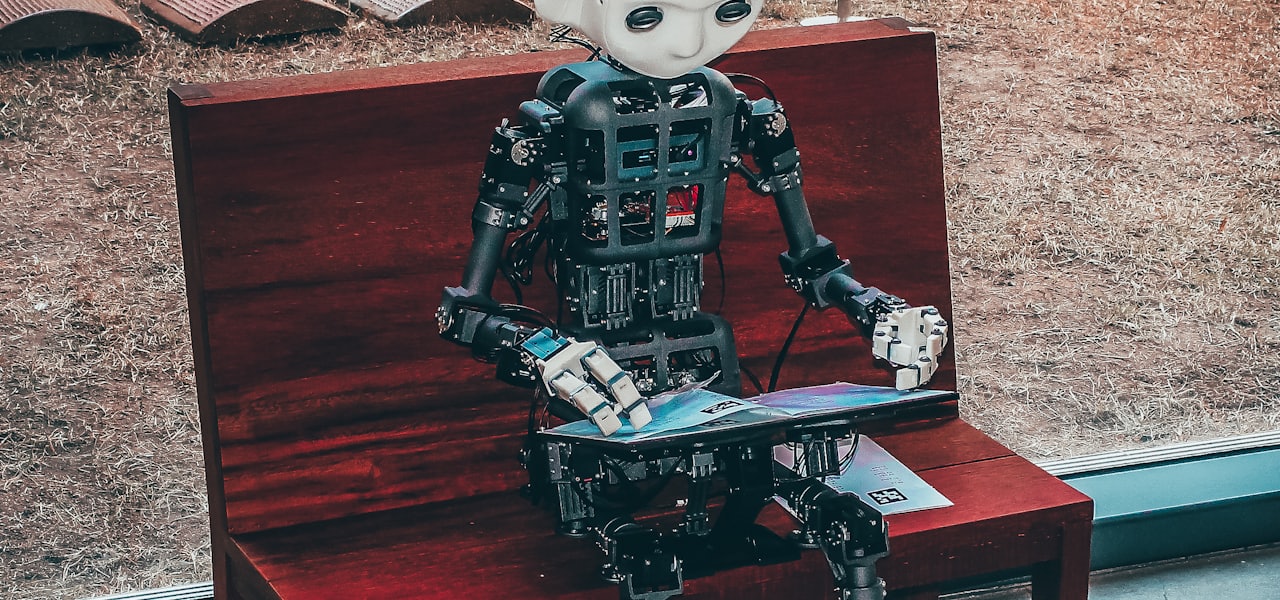
Agent verification is activity to gain assurances that purposeful artificial constructs act in accordance with their specifications. While primitive forms of inorganic agents have been used in manufacturing for centuries, the study of artificial agents did not begin until the mid 20th century. Foundational work on such agents was closely bound with the emergence of artificial intelligence as an academic discipline. Early agents deployed for industrial control systems and in computing were often controlled by quite simple logic however, not involving artificial intelligence as such. When deployed as part of a multi-agent system, even such simple agents could require special agent orientated testing methods, as their collective behaviour was challenging to verify with traditional testing techniques. Difficulties in providing assurances that agents will not behave in dangerous ways became more prevalent after the introduction of LLM agents, especially after the rapid acceleration of their deployment in 2025. The verification of agent behaviour can be conducted by formal or informal methods. Informal verification requires less mathematical skill. But when agents are part of systems where errors have significant risks — such as danger to human life, environmental damage or major financial loss — formal verification is preferred. Both regulators and system designers themselves like formal verification as it provides a high degree of mathematical certainty. It is not however always possible to formally test all aspects of an agent based system's behaviour, especially where newer LLM based agents are concerned, due in part to their high degree of autonomy. Accordingly, agent verification for low impact deployments might be carried out only with informal methods, while for high impact deployments, it may be performed with a mix of formal and informal techniques. == Terminology == In academia, the term agent verification is often defined to mean activity concerned with gaining assurance that the agent behaves in accordance with its specification - whether by processes such as testing or simulation. 'Verification' is typically contrasted with 'validation', the latter meaning activity concerned with checking that the specification itself meets user or real world needs. Such definitions are not universally adhered to however - for example, in some workplaces and documents, the words 'verification' and 'validation' can be used synonymously. Efforts to gain confidence in Agents have intensified sharply since 2025 due to the rapid roll out of LLM agents; different terms are sometimes used in the commercial sector. Here the term 'agent verification' can be used in the same sense as it is in academia, but sometimes the same activity can be covered by more ambiguous and wider ranging terms such as 'Agent governance' , 'Agent observability' or 'AI agent policing'. == History == === Classical agents === The theoretical underpinnings for artificial (inorganic) agents emerged in the mid 20th century, with establishment of cybernetics and artificial intelligence. Oliver Selfridge's 1958 Pandemonium - A Paradigm for Learning paper was an important early theoretical contribution in establishing agent oriented architecture. Practical implementations of agents for real world applications began to become widespread in the 1990s, after the introduction of the belief–desire–intention software model (BDI), and agent-oriented programming. Pure digital agents were deployed in computer infrastructure for purposes such as monitoring, while agents connected to real-world sensors and actuators were increasingly used in industrial control systems. While the concept of artificial agents was interwoven with early artificial intelligence studies right from the start, early agents lacked general purpose reasoning capabilities, often only having simple if then logic. Even a device as simple as a thermostat, which has a sensor and a means of acting, can be considered a proto agent in this sense. Verifying the behaviours of a simple single agent system is not generally especially difficult, but it can be a different matter when several simple agents coexist in the same system. Craig Reynolds's work on boids showed that relatively complex, "intelligent" behaviour can emerge from a number of such simple agents working together in a Multi-agent system (MAS). By the 1990s, even the behaviour of a single agent system could sometimes be quite complex; in accordance with the Belief–desire–intention software model, agents could have believes that might evolve over time. Agents were increasingly introduced that were controlled by quite large decision tree models, which had new vulnerabilities to adversarial attack. It was becoming increasingly apparent that traditional software verification methods had limitations for testing such agents, or even for the more primitive type of agents when they were deployed as part of a MAS. It was the use of agents for industrial control systems, sometimes associated with robotics, that lent urgency to the practice of agent verification. Informal testing might be acceptable for digital agents used say to monitor whether each of an organisation's computers are properly licensed. But with an increasing potential for faulty agents to result in a failure that might cause a large fire to break out at a chemical manufacturing plant, a botched medical operation, or even a crashed aircraft, the need to develop reliable means of verifying behaviour of such agents was considered urgent. The Foundation for Intelligent Physical Agents was established in 1996. From the late 90s, a growing number of industry and university based scientists began working on the problem, with researchers publishing papers on the verification of both single and multi agent systems. Much of this work showed how formal verification techniques like model checking could be used to gain a high level of assurance that agent based systems would conform with their specification. A 2018 systematic review covering 231 studies found that model checking was the most common technique for agent verification, with theorem proving the second most commonly used formal verification method. In the first two decades of the 20th century, agents run by AI became more common, with Siri and Alexa being well known examples. But such agents still lacked general reasoning capabilities and did not pose new pressing problems for agent verification. === General purpose reasoning agents === The advent of LLMs created huge potential for further use of artificial agents, as agents based on them could have general purpose cognitive abilities. Agents run by LLMs (and occasionally non-LLM foundation models) have similar vulnerability to adversarial attack as those run by decision tree models. The wider scope of actions for LLM agents has created new challenges for their verification, over and above those present for classical agents. For example, the LLM's neural network endows it with infinite domains, an especial challenge for traditional formal verification techniques. Academics began to study the problems involved in verifying LLM agents from 2018. Deployment of such agents began to accelerate in late 2023 after OpenAI's "function-calling" API was made available, and especially after Anthropic's late 2024 introduction of Model Context Protocol (MCP), a standardised way for LLM agents to gain contextual awareness, and to act on the world by calling various external tools. The rapid rollout of LLM agents following MCP's release has seen the task of agent verification receive increased attention within academia, and also from the private sector. In 2024 and 2025 several startups focusing on LLM agent verification have been founded in both Europe and the US to meet growing demand. == Approaches == === Formal verification === Formal verification involves proving the correctness of some or all aspects of a system using mathematical methods. Such methods can range from manual formal proof, to verification assisted with automated theorem provers like Isabelle. For agent verification, model checking is by far the most frequently used formal verification method; for pre-LLM models it was often complemented with techniques using computation tree logic. Another common method is theorem proving. Formal verification provides a higher degree of confidence than informal methods, but it is not always used, even when it is possible. Sometimes a person or organisation developing software agents won't have the necessary skills, or may not see it as worth the effort if the agent(s) will not have the ability to cause much harm even if they malfunction. When agents are deployed in systems where errors could have serious consequences, the ability of formal verification methods to provide mathematical certainty tends to be strongly preferred by both regulators and designers themselves. But even for high impact systems, formal verificatio
Agents of S.H.I.E.L.D. season 4
The fourth season of the American television series Agents of S.H.I.E.L.D., based on the Marvel Comics spy organization S.H.I.E.L.D., follows Phil Coulson and other S.H.I.E.L.D. agents and allies after the signing of the Sokovia Accords. It is set in the Marvel Cinematic Universe (MCU) and acknowledges the continuity of the franchise's films. The season was produced by ABC Studios, Marvel Television, and Mutant Enemy Productions, with Jed Whedon, Maurissa Tancharoen, and Jeffrey Bell serving as showrunners. Clark Gregg reprises his role as Coulson from the film series, starring alongside the returning series regulars Ming-Na Wen, Chloe Bennet, Iain De Caestecker, Elizabeth Henstridge, and Henry Simmons. They are joined by John Hannah who was promoted from his recurring guest role in the third season. The fourth season was ordered in March 2016, with production taking place from that July until the following April. Due to its broadcast schedule, the season was split into three "pods": Ghost Rider for the first eight episodes, featuring recurring guest star Gabriel Luna as the supernatural Robbie Reyes / Ghost Rider and exploring mysticism in the MCU alongside the film Doctor Strange (2016); LMD, referring to the new Life Model Decoy program, for the next seven episodes which focus on recurring guest star Mallory Jansen as the LMD Aida; and Agents of Hydra for the final seven episodes, partly set in a "what if" virtual reality that allowed the return of former series regular Brett Dalton as Grant Ward. The season is also affected by the events of the film Captain America: Civil War (2016), and continues storylines established in the canceled series Agent Carter. The first episode premiered at a screening on September 19, 2016, with the season then airing for 22 episodes on ABC, from September 20, 2016, until May 16, 2017. The premiere debuted to 3.58 million viewers, down from previous season premieres but average for the series. Critical response to the season was positive, with many feeling that each pod was better than the last and in particular praising the visual effects and tone of Ghost Rider, the writing and acting of LMD, and the character development and political commentary explored during Agents of Hydra. The season saw series low viewership, but was still considered to have solved ABC's problem during its new Tuesday night timeslot, and the series was renewed for a fifth season in May 2017. == Episodes == == Cast and characters == == Production == === Development === Agents of S.H.I.E.L.D. was renewed for a fourth season on March 3, 2016, earlier than usual for the series. Executive producer Jed Whedon said on this, "We're thrilled to know going into the end of [season three] with certainty that we will be returning, because we can build our story accordingly." Executive producer Maurissa Tancharoen also noted that logistics for hiring directors for the season in advance would be easier, "which is a very nice privilege to have...that's a luxury". The end of the episode "What If..." features an onscreen tribute to Bill Paxton, who died in February 2017 and had portrayed John Garrett in the series' first season. The series paid additional tribute to Paxton in "All the Madame's Men" with promos during The Bakshi Report news segment showcasing John Garrett as a fallen American hero. The end of "World's End" features a similar onscreen tribute to Powers Boothe, who died in May 2017 and had portrayed Gideon Malick in the series' third season. === Writing === The season shifted to the later 10 pm timeslot, allowing it to take on a darker, more mature tone than previous seasons. According to Tancharoen, "The whole tagline for this year is 'Agents of S.H.I.E.L.D. After Dark'". The timeslot gave the series the opportunity to present an increased level of violence and partial nudity, as well as take more risks and present edgier themes. Following the third-season finale, Tancharoen stated that the fourth season would explore the guilt Daisy Johnson has over Lincoln Campbell's death. Executive producer Jeffrey Bell noted the writers tried to continue the tradition of "finding new combinations and new conflicts" between different sets of characters, given "a lot of procedurals [see] the same people doing the same thing for five years". Pairings that would be explored included Coulson and Mack, continuing from the end of season three, who have a mutual respect for one another due to their relationships with Daisy, and Leo Fitz and Holden Radcliffe, who work together. The Fitz-Simmons relationship was also explored more, examining the new challenges it presented for the two "working together, loving each other and living together". Following the third season's dealing with the themes of Captain America: Civil War (2016), such as the opposing reactions to the Inhumans, Whedon said that the question of "How do you deal with a war with powered people at that level, a government level?" was one that they wanted to answer in the fourth season. Tancharoen called the Inhumans "a permanent part of our universe now", with Whedon adding, "we have a quick-fire way of introducing people with powers. It gives us a lot of leeway in our world, and it lets us explore the metaphors of what it is like to be different. We will never close that chapter." With the Inhumans film being removed from Marvel Studios' release schedule, the series had "a little more freedom" and were "able to do a little bit more" with the species, including the potential of introducing some of the "classic" Inhumans, though the series would focus less on Inhumans than the third season which saw "a real significant Inhuman agenda story". It was not intended to be a spin-off of Agents of S.H.I.E.L.D. On the evolution of S.H.I.E.L.D. to featuring so many powered characters, Whedon said "the dynamic in the world has changed. There was one person with powers, and then by The Avengers there were maybe six total ... now they're much more prevalent, so there's reaction from the public based on that." The season is structured into three "pods" based on its airing schedule: the first eight episodes, subtitled Ghost Rider; LMD (Life Model Decoy) for the subsequent seven episodes; and a third pod for the final seven episodes called Agents of Hydra. Elements and characters cross over between the different pods, but the sections "definitely have a different feel" from one another, as Bell explained that 22 episodes "is a long time to hold a big bad or a single plot line, especially for an audience", and for the past two seasons, the series was able to have two separated halves that "allows us to introduce a big bad. And then, something happens and we rise somebody new ... Now, there's three of those." "Financial considerations" were also taken into account in creating the pods for the season, as using LMDs does not "cost as much as setting a guy's head on fire via CGI". In terms of writing the "complicated season", Whedon said the writers were "aware that our fans are our fans and have spent some time with these characters and are clever and see things coming sometimes ... Part of our job is to create not just what we are presenting on plot, but letting the audience be one step ahead of us and being one step ahead of that." He added that the writers knew that they wanted to tell a Ghost Rider story, an LMD story, and a "what if" scenario, and the hardest part was making each pod still fit together as a single season. The major connection ultimately became the Darkhold, which leads from the magic of Ghost Rider to the advanced science of LMD and then the Framework in Agents of Hydra. Ghost Rider also reappears in the final episode of the season, "World's End", as an additional connection. ==== Ghost Rider ==== While planning the fourth season, Marvel suggested that the series introduce Ghost Rider, after the character's film rights had returned to Marvel from Sony in May 2013. Loeb felt that this made the season unquestionably "the series' biggest" with the "most ambitious story yet". He added that "one of the things that we talked about is, S.H.I.E.L.D. always looked out for the weird, the unusual, the things that were and could be a problem for the public", and Marvel realized that Ghost Rider's abilities, which are more mystical than anything seen in the series to date, opened up "a quarter of the universe that we haven't really spent a lot of time exploring ... what happens if our very real, our very grounded agents who are very much a family have to take on something that is as bizarre and powerful and unique as Ghost Rider." Bell added that the producers would have been willing to give an entire season of the show to a Ghost Rider arc if the season was 13 episodes or less, but 22 episodes seemed too long to "feel like one flavor". The Robbie Reyes version of Ghost Rider was chosen over other versions of the character from the comics because of his relationship with his brother Gabe, w